
Water Quality · Phoenix Valley-wide Plumbing
Your Water Works Hard in Arizona
Hard water destroying your fixtures and appliances. Contaminants you can taste. We solve both with water softeners that eliminate scale and RO systems that deliver genuinely clean drinking water.
What's Included
- We test your water before recommending a system
- Sized to your actual hardness level & household usage
- We install, repair, and maintain — full service
Arizona's water reality
Arizona Has a Hard Water Problem
The Phoenix Valley area consistently ranks among the hardest water markets in the United States. Cities like Chandler, Gilbert, Mesa, and Queen Creek regularly see water hardness levels of 15–25+ grains per gallon, well above the 3–5 gpg threshold where a water softener starts making a real difference.
What that means for your home:
Scale buildup on fixtures and appliances
Calcium and magnesium deposits clog showerheads, coat water heater elements, and reduce appliance efficiency over time.Shortened appliance lifespan
Water heaters, washing machines, and dishwashers in hard water areas wear out significantly faster than manufacturer estimates.Dry skin and brittle hair
Mineral-heavy water strips natural oils and leaves a residue even after rinsing, a daily frustration most East Valley residents have just accepted.Higher energy bills
Scale buildup on water heater elements reduces efficiency and increases energy consumption, adding cost every month it goes unaddressed.
water hardness By City (grains per gallon)
Gilbert
20 gpg
Mesa
21 gpg
Queen Creek
25+ gpg
Softener Threshold
East Valley cities rank among the hardest water markets in the United States — often 4–8× above the threshold where a softener makes a real difference.
Spots on dishes, no matter what
Salt-based water softeners
Water Softener Installation for Phoenix Homes
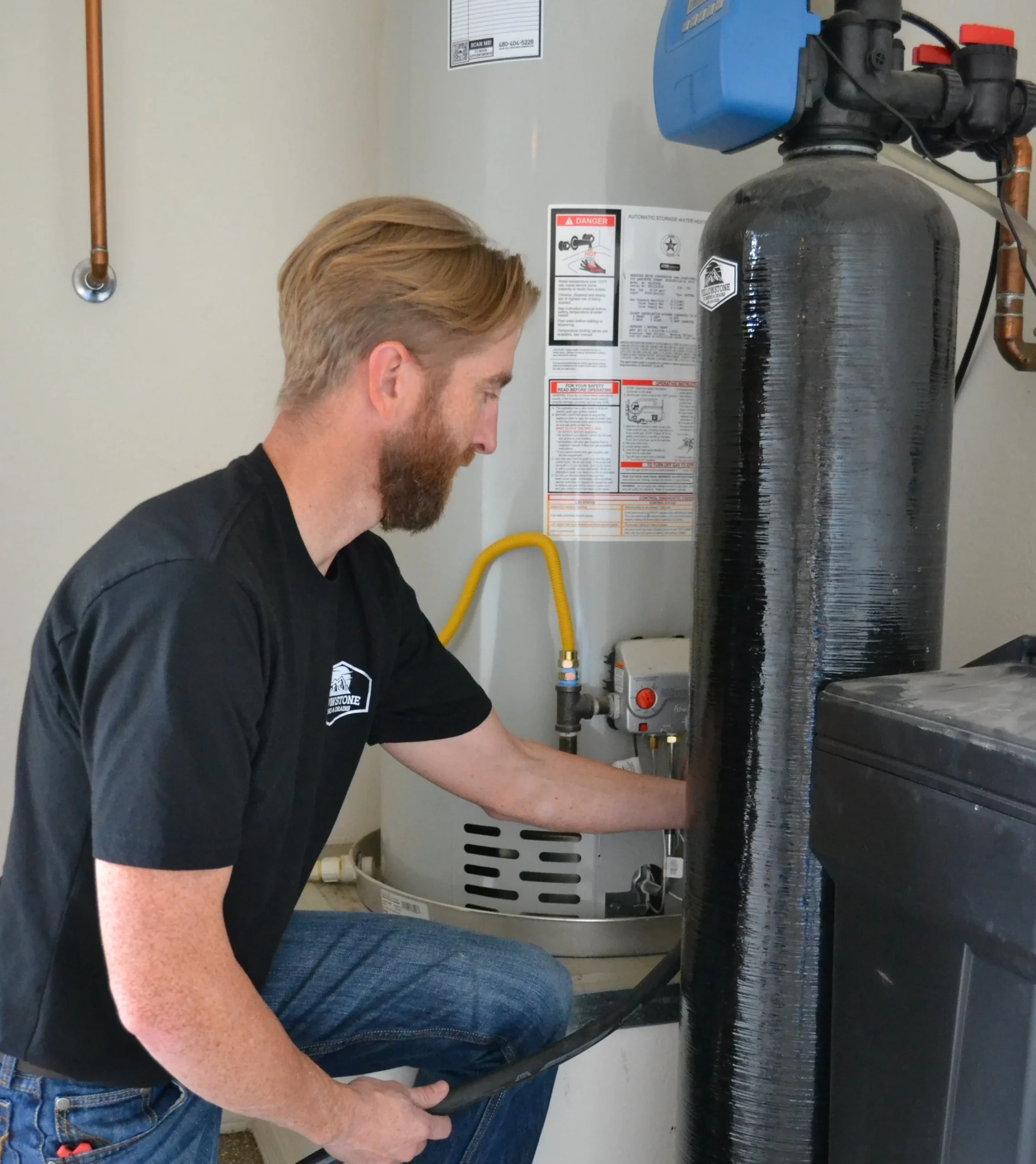
A salt-based water softener is the most effective solution for the level of hardness most Phoenix area homes deal with. It works by replacing calcium and magnesium ions with sodium ions through ion exchange, eliminating the minerals that cause scale, spots, and dryness before they ever reach your fixtures.
At Yellowstone Plumbing & Drains, we size and install water softeners based on your actual water hardness level, household size, and water usage, not a one-size-fits-all guess. We'll test your water, recommend the right capacity, and install it properly so it performs the way it should from day one.
What Changes When You Have Soft Water
Dishes and glassware come out clean and spot-free
Soap and shampoo lather the way they're supposed to
Skin feels noticeably softer after showering
Fixtures and appliances stay cleaner longer
Water heater efficiency improves
Common Water Softener Problems We Fix
"I haven't had to add salt in months."
Often means a salt bridge has formed in the brine tank, or the system has stopped regenerating altogether. If your water feels hard again, this is likely why.
"My softener seems to be running but the water still feels hard."
Could be a clogged injector, a bypass valve left open, or a resin bed that's exhausted and needs replacement.
Alternative systems
What Salt-Free Water Conditioners Do (and Don't Do)
Salt-free systems, sometimes called water conditioners or descalers, work by altering the structure of calcium and magnesium so minerals don't stick to pipes and appliances, rather than removing them entirely.
They're a legitimate option for scale prevention, particularly for homes with water hardness under 10 gpg or households with sodium intake restrictions or septic system concerns.
Salt-free conditioner
- Scale prevention in pipes
- Low maintenance
- No sodium added to water
- Doesn't remove minerals
- Still spots on dishes/glass
- Under-performs at 15+ gpg
Salt-based softener
- Fully removes hardness minerals
No spots on dishes or glass
Protects appliances fully
Noticeable skin & hair difference
Best choice at 15+ gpg
Requires regular salt top-off
Reverse osmosis systems
What is a Reverse Osmosis System?
The Most Effective Home Water Filtration Available
A reverse osmosis system works by forcing water through a semipermeable membrane with pores small enough to block dissolved contaminants.
The result is water that's cleaner, clearer, and better tasting than anything that comes straight from the tap, without the ongoing cost and waste of bottled water. A properly installed and maintained RO system is one of the most cost-effective long-term investments a homeowner can make in their family's water quality.
What a reverse osmosis system filters out
Lead
Arsenic
Chlorine & Chloramines
Fluoride
Nitrates
PFAS (Forever Chemicals)
Heavy Metals
Total Dissolved Solids

Choosing the right RO system for your home
Standard
3–5 Stage System
The most common residential setup. This option handles the vast majority of contaminants found in Arizona water.
Includes
Sediment filtration
Carbon pre-filtration
RO membrane
Post-carbon polishing stage
ADVANCED
6-7+ Stage System
Everything in the Standard, plus additional stages for specific health goals or well water sources.
Everything in Standard, plus
UV sterilization
Remineralization filter
Alkaline / pH adjustment filter
Not sure which system is right for your home?
Common Questions
Water Quality FAQs
Water softener questions
Reverse Osmosis questions
Clean water starts here
Clean Water Starts with One Call
Whether you're dealing with hard water damage, wondering what's in your drinking water, or ready to address both — we'll help you find the right solution for your home and install it right.